


A collision with a commercial truck can create questions that a standard car crash does not. People often turn to truck accident attorneys when they need help understanding who may be responsible, what records exist, and how a commercial insurer may evaluate a claim. The answers often depend on evidence that is technical, time-sensitive, and spread across several people or companies. The process can also feel overwhelming when an injury affects your health, work, and family responsibilities.
Contact The Law Office of Chad G. Mann to discuss your Missouri truck accident claim.
This guide explains what truck accident attorneys do after a Missouri crash.
Truck accident attorneys help injured people evaluate a potential claim, preserve important records, and investigate the crash. They identify potentially responsible parties, document present and future losses, communicate with commercial insurers, and prepare for settlement or litigation. They explain the available choices so the injured person and family can make informed decisions. No attorney can promise a particular result, and the appropriate strategy depends on the evidence and the injuries.
What Happens in the First Consultation With Truck Accident Attorneys?
In the first consultation, truck accident attorneys listen to the crash timeline, review the known injuries and insurance communications, identify urgent evidence, and explain what the legal process may involve. The meeting is a fact-finding conversation, not a test. You do not need a perfect file before asking for an evaluation.
The attorney will usually ask about the date and location of the collision. The truck and carrier involved, emergency treatment, follow-up care, work limitations, witnesses, photographs, and contact from an insurer. A family member who is helping with care or communication can often participate. The purpose is to establish what is known, what is uncertain, and what needs attention first.
Bring what you have, but do not wait for a perfect file
Useful materials may include the crash report, photographs, medical records or bills, discharge instructions, health-insurance correspondence, wage information, insurance details, and witness names. Bring copies if convenient. Do not delay a consultation because a document is missing. Counsel can explain what additional records may be relevant and how they may be obtained.
It is also reasonable to bring questions about who will handle the case, how updates will be provided, what investigation may be appropriate, and which decisions remain yours. These questions to ask truck accident attorneys can help you prepare for the meeting.
Discuss the process and fee agreement clearly
A consultation should include an explanation of the initial evidence, the issues that remain unknown, and the possible next steps. Ask how fees and case expenses work, when they are incurred, and how they are addressed in the written agreement. A clear discussion helps you understand the relationship before you decide whether to proceed.
The Law Office of Chad G. Mann emphasizes direct attorney access and an insurance-industry perspective. That background can help counsel understand how an insurer may evaluate liability, coverage, documentation, and settlement demands. It does not eliminate disputes, but it can inform a careful and realistic process.
How Do Truck Accident Attorneys Investigate a Missouri Crash?
Truck accident attorneys investigate a Missouri crash by preserving scene evidence, examining vehicle damage and roadway conditions, reviewing electronic and commercial records, interviewing witnesses, and testing each potential explanation against the available facts. The investigation may include the driver, carrier, maintenance provider, cargo loader, and equipment manufacturer when the evidence supports those inquiries.
Commercial truck evidence can be technical, distributed across several companies, and vulnerable to being overwritten. A prompt investigation may seek photographs, video, police records, debris patterns, vehicle data, driver logs, electronic logging device information, dispatch records, inspection records, and maintenance documents. These records are not automatic proof of fault. They help establish a timeline and identify questions that require closer analysis.
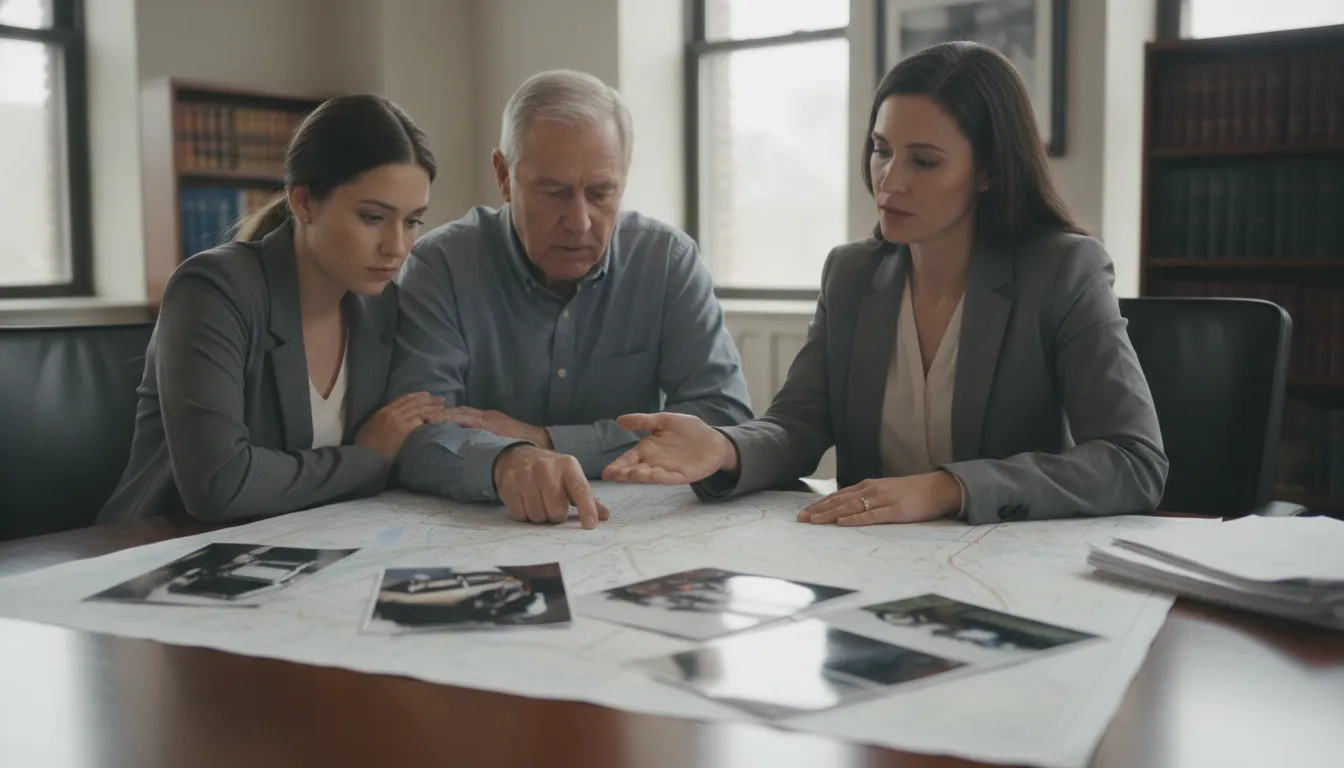
When the evidence points to a serious or permanent injury, the investigation should account for future medical care. Changes in work capacity, and the practical effect on the person’s daily life. That broader record can help separate a quick estimate from a more complete assessment.
Preserving crash-scene and electronic evidence
Photographs, roadway measurements, vehicle damage, nearby video, and witness accounts may become harder to obtain as time passes. Counsel may send preservation requests to entities that control relevant records. Electronic logging data, driver logs, inspection records, and maintenance files can be particularly important when fatigue, scheduling, mechanical condition, or regulatory compliance is disputed.
The Federal Motor Carrier Safety Administration provides materials concerning crash investigations and motor-carrier safety records. Those materials can help identify the types of commercial evidence that may be relevant. But the legal significance of a record depends on the facts of the specific collision.
Reviewing driver, carrier, and vehicle records
The investigation can extend beyond the person behind the wheel. Depending on the evidence, counsel may examine driver qualifications, training, prior safety concerns, inspection history, disciplinary records, dispatch practices, carrier policies, maintenance work, and cargo loading. The goal is to connect a specific act or omission to the collision, not to name every company associated with the truck.
A maintenance provider may be relevant when a mechanical problem contributed to the crash. A cargo loader may be relevant when cargo shifted or was not secured. A manufacturer may be relevant when a defective component is connected to the event. Each theory requires evidence.
Using reconstruction when the sequence is disputed
Some collisions involve competing accounts about speed, visibility, braking, lane position, following distance, or the point of impact. When necessary, a qualified reconstruction professional may analyze photographs, vehicle damage, roadway evidence, event data, video, and witness statements. The purpose is to clarify the sequence and test assumptions, not to replace the underlying evidence.
Why Can More Than One Party Be Responsible?
Truck crashes often involve a relationship among a driver, motor carrier, vehicle owner, leasing company, maintenance provider, cargo loader, shipper, or equipment manufacturer. That does not mean each party is legally responsible. It means the investigation should not assume at the outset that the driver is the only possible source of evidence or fault.
| Party | Why the party may be reviewed | Evidence that may matter |
|---|---|---|
| Driver | The driver’s decisions or conduct may have contributed to the collision. | Witness accounts, vehicle data, driving records, logs, and the physical scene. |
| Motor carrier | The carrier may have responsibilities involving hiring, supervision, scheduling, operations, or safety compliance. | Company policies, qualification files, dispatch records, training, and inspection history. |
| Maintenance provider | A mechanical condition may raise questions about inspection or repair work. | Maintenance records, repair invoices, service communications, and vehicle condition. |
| Cargo loader or manufacturer | Improperly loaded cargo or a defective component may be considered when connected to the crash. | Loading records, photographs, inspection evidence, component testing, and technical analysis. |
The evidence must connect a particular act or failure to the collision and the resulting injuries. A commercial insurer may focus on one explanation, while a complete investigation may reveal additional facts. The firm’s insurance-industry insight is useful in understanding how carriers evaluate a claim and where the documentation may be challenged.
For another process-focused perspective, read how truck accident lawyers build a Missouri case. It complements this guide by showing how early evidence can shape later strategy.
How Is a Truck Accident Claim Valued and Negotiated?
Valuing a truck accident claim is not simply a matter of adding the first medical bills and accepting an insurer’s opening offer. The assessment should account for the injuries documented so far, treatment that may still be needed. Lost income, reduced earning ability, pain, limitations, and the effect of the injury on daily life. The evidence and the particular facts control the analysis.
Building a record of present and future losses
Medical records can help show the nature and severity of an injury, the treatment received, the expected recovery, and any permanent limitations. A serious injury may require information about rehabilitation, future procedures, assistive equipment, home modifications, attendant care, or other long-term needs. Employment records, tax documents, wage statements, and professional opinions may help document the financial effects.
Economic damages may include past and anticipated medical expenses, lost wages, and reduced earning ability. Non-economic damages may address losses such as pain, suffering, mental anguish, disability, disfigurement, and loss of enjoyment of life. Missouri does not impose a general statutory cap on compensatory damages in ordinary personal injury cases. The absence of a cap does not determine the value of an individual claim or guarantee recovery.
Handling commercial insurer communications
Commercial insurers may request statements, records, authorizations, or a quick settlement discussion. Before responding to questions about disputed fault or the full extent of an injury, understand what is being asked and what rights a document may affect. A recorded statement or release can have consequences, particularly when the medical picture is still developing.
Counsel can organize the evidence, communicate with the insurer, evaluate an offer, and explain the risks and benefits of different options. The purpose is not to create unnecessary conflict. It is to make sure a decision is based on a developed record rather than pressure or incomplete information.
For broader context about serious, long-term injuries, see the firm’s guide to a Missouri catastrophic injury claim. A truck crash may cause injuries that require a different level of future-care analysis than a short-term soft-tissue injury.
Readers may also review the firm’s Missouri truck crash rights guide for related information about trucking rules and claim issues. These resources provide general education, while the facts of each collision determine which issues require legal attention.
Will a Truck Accident Case Go to Court in Missouri?
A truck accident claim may resolve through investigation and negotiation, or it may require litigation if the parties cannot reach a fair agreement. Filing a lawsuit is not a promise that a case will go to trial. It is a procedural step that can create a formal setting for exchanging evidence, presenting legal arguments, and asking a court to resolve disputed issues.
The demand package and negotiations
A demand package generally presents the facts of the crash, the liability theory, the medical history, the losses, and the amount requested. The insurer may accept, reject, or respond with questions and a counteroffer. Negotiations can continue as additional records clarify the injuries and responsibility.
A demand should be supported by evidence rather than dramatic language. The client should understand the strengths, uncertainties, expected timing, and possible consequences of accepting or rejecting an offer.
What happens if a lawsuit is filed?
Litigation can involve pleadings, written discovery, depositions, expert review, motions, and preparation for trial. The attorney may work with medical, vocational, economic, or reconstruction professionals when their analysis is appropriate. The client remains an important source of information and should receive an explanation of significant decisions.
Settlement remains possible after litigation begins
Parties can continue discussing resolution during litigation. A case may settle after discovery clarifies disputed facts, after experts evaluate the evidence, or before trial. A client should receive an explanation of the risks, timing, costs, and potential consequences of each option before deciding whether to accept an offer.
Before the FAQ, review whether you have preserved photographs, medical records, employment information, insurer correspondence, and witness details. Bringing those materials to a conversation can make it easier to identify unanswered questions and time-sensitive evidence.
How Do Missouri Fault Rules and Deadlines Affect a Truck Claim?
Missouri’s legal rules affect how responsibility and timing are analyzed. The general rules provide a framework, but the correct application depends on the crash evidence, the parties involved, the injury, and the legal theory.
- Analyze comparative fault. Missouri follows a pure comparative fault approach. An injured person may still seek damages if they were partly responsible, but the recovery is reduced according to the person’s percentage of fault. Evidence from the scene, vehicles, witnesses, records, and medical history may affect that allocation. See the explanation of comparative negligence and discuss Missouri-specific application with counsel.
- Separate fault from the losses. Economic losses may include documented financial harm. Non-economic losses may include pain and suffering and the effect of an injury on daily life. Medical and employment records help connect the losses to the crash.
- Know the general personal-injury deadline. Missouri’s general statute of limitations for personal injury actions is five years from the date the cause of action accrued. The rule appears in Missouri Revised Statutes Section 516.120. This deadline is not a reason to wait because evidence can disappear and commercial records may be subject to retention policies.
- Check for special rules. The five-year period is a general personal-injury rule, not a universal deadline for every claim arising from a truck crash. Claims involving wrongful death, a government entity, minors, or another legal theory may follow different rules. Do not assume the general period applies without a case-specific review.
- Preserve information early. Keep photographs, medical records, bills, employment information, correspondence, and witness names. Do not delete relevant messages or casually speculate about disputed fault with an insurer. A timely review allows the deadline, fault issues, and potential damages to be evaluated together.
Missouri law can be favorable in important ways, including pure comparative fault and no general cap on compensatory damages in ordinary personal injury cases. Those rules do not replace proof. A careful case assessment connects the law to the evidence and the actual effect of the injury.
For related medical-evidence issues, see the firm’s Missouri traumatic brain injury recovery guide. For paralysis-related future-care questions, review the spinal cord injury claim guide.
Frequently Asked Questions
What do truck accident attorneys do after a Missouri crash?
They help protect the claim while investigating what happened, identifying potentially responsible parties, documenting injuries, and communicating with commercial insurers. They may also prepare for negotiation or litigation while explaining the available choices.
Can I sue a trucking company if the driver caused the accident?
Possibly, depending on the driver’s relationship with the company and the evidence connecting the company to the crash. Hiring, supervision, scheduling, training, maintenance, and carrier operations may require review. Responsibility is fact-specific and should not be assumed from the company name alone.
What happens when a truck driver gets in an accident?
The driver and carrier may have reporting, safety, insurance, and record-preservation responsibilities. An injured person should seek appropriate medical care, preserve photographs and communications, avoid guessing about fault, and obtain advice before signing a release or accepting a settlement.
Is it better to settle with insurance or get a lawyer?
The answer depends on the severity of the injuries, the evidence, the number of potentially responsible parties, the available coverage, and the insurer’s position. An attorney can review the facts and explain the risks of handling the claim alone or accepting an early offer. The decision should be informed by the developed record, not pressure.
When should you hire a truck accident attorney?
Consider seeking a timely review when the crash caused serious injury, the insurer disputes fault. Multiple parties may be involved, a commercial vehicle’s records may be important, or a settlement release is being requested. Early guidance may help preserve evidence even when you have not decided whether to pursue a claim.
Ready to Discuss Your Missouri Truck Accident Claim?
A truck crash can raise difficult questions about evidence, responsibility, medical needs, insurance communications, and timing. The Law Office of Chad G. Mann can review the available information and explain possible next steps without promising a particular outcome.