
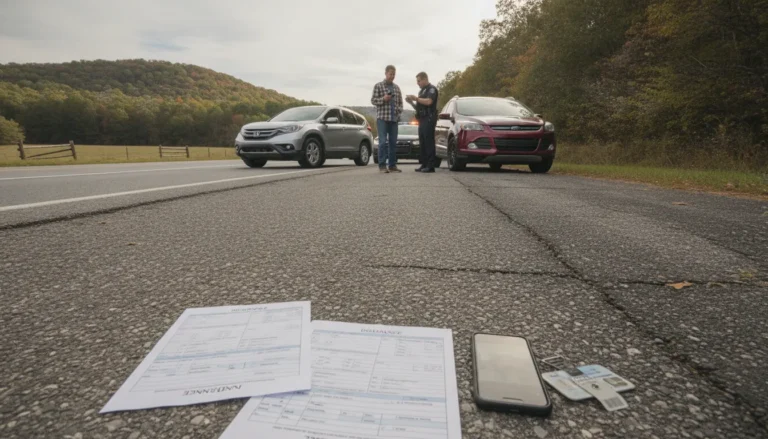
Crash evidence can disappear before the pain from an Ozark collision fully sets in. Photos get lost, vehicles are repaired, and an early insurance statement can shape the claim long before injuries and costs become clear. A car accident lawyer near Springfield can help organize proof before the insurer decides fault.
A car accident lawyer Ozark MO residents contact can help preserve proof, manage insurer communications, and build a clear record of the collision. Start by calling 911, seeking medical care, photographing vehicles and road conditions, collecting witness details, and saving every bill, message, and insurance document. The Missouri State Highway Patrol’s standardized accident report records witnesses, traffic controls, weather, road conditions, and narrative statements, creating an important factual foundation. Report the crash to your insurer promptly, but avoid guessing about fault or injuries and do not give a recorded statement before understanding your rights. Keep damaged property, follow medical advice, and organize receipts and missed-work records so your attorney can connect each loss to reliable evidence.
Knowing the priorities is one thing; carrying them out while shaken, injured, or facing calls from an adjuster is harder. What to do after an Ozark car accident explains the immediate actions that protect your health and claim, step by step. Here’s how.
Car Accident Lawyer Ozark Mo: What to do after an Ozark car accident
The first minutes after a crash can shape your health and the record of what happened. Stay calm, check for danger, and focus on safety before discussing blame or insurance.
Safety and medical care
Move away from traffic, fire, or leaking fuel if you can do so safely. Call 911 when anyone may be hurt or the scene creates a road hazard. Accept emergency care, and seek prompt medical attention for pain, dizziness, weakness, or other new symptoms.
-
Check yourself and your passengers for injuries. Do not move anyone with a possible neck or back injury unless immediate danger makes it necessary.
-
Call 911 and give the dispatcher your location, nearby landmarks, and known injuries. Follow the dispatcher’s instructions while you wait for help.
-
If it is safe and the vehicles can move, get out of active traffic. Turn on hazard lights and remain near the scene.
-
Exchange names, contact details, driver’s license information, vehicle details, and insurance information. Keep the conversation brief, calm, and factual.
-
Photograph vehicle damage, license plates, debris, skid marks, signs, signals, road conditions, and the wider scene. Ask witnesses for their names and contact details.
-
Write down what you remember as soon as possible. Note the time, route, weather, direction of travel, and anything said at the scene.
Reporting and scene records
Ask the responding officer how to get the official crash report. Missouri’s standard report can record witnesses, traffic controls, road conditions, weather, and statements. The Missouri State Highway Patrol STARS manual explains how officers collect and organize that crash information.
Keep original photos, videos, receipts, and damaged personal items in a safe place. Do not edit or delete files. This evidence you need to preserve guide explains why scene records and physical items may matter later.
Protecting the claim after the scene
Notify your insurer that a crash occurred, but stick to facts you know. Avoid guessing about speed, injuries, or fault. Before giving a recorded statement, review these insurance steps after a collision and keep copies of all messages.
A car accident lawyer in Ozark, MO can review the report, records, and insurer requests when injuries or fault are disputed. Bring your timeline, medical records, photos, witness details, and insurance correspondence to that review.
Evidence to preserve after a collision
Evidence can change or vanish soon after a crash. Vehicles get repaired, marks fade, and witnesses may forget details. Start saving what you can once everyone is safe. Keep original files and make backup copies rather than editing or discarding them.
What to capture at the scene
Use your phone to photograph and record the full scene from several safe locations. Capture each vehicle, damage, license plates, debris, skid marks, traffic signs, and nearby buildings. Also record the weather, light, road surface, and any blocked view. Missouri accident reports include road, weather, light, and traffic-control details in their standard fields.
- Photograph visible injuries soon after the crash and as they change.
- Save each driver’s name, contact details, plate number, and insurance information.
- Ask witnesses for names, phone numbers, email addresses, and a short account.
- Note nearby homes or businesses that may have security camera footage.
Witness details matter because Missouri’s standard crash report includes a witness section. The report also records vehicle actions, event sequence, and possible contributing causes. Request the report when it becomes available. The Missouri State Highway Patrol STARS manual explains the information collected in these reports.
Records that show injury and financial loss
Create one folder for every medical and financial record tied to the collision. Save emergency room papers, test results, treatment plans, prescriptions, therapy notes, bills, and insurance statements. Ask employers for written proof of missed shifts, used leave, reduced hours, or other lost pay.
- Receipts for medicine, medical equipment, travel, towing, storage, and repairs
- Vehicle estimates, final invoices, rental records, and property damage photos
- Emails, letters, claim forms, and messages exchanged with insurers
- Names and dates for each doctor, clinic, therapist, and pharmacy visit
Keep this material in date order and retain the original versions. Do not alter records or fill gaps with guesses. Missouri law bars altering, destroying, hiding, or suppressing evidence to impair its use in an investigation. A clear file protects accuracy and helps explain the evidence you need to preserve.
A symptom journal and why timing matters
Begin a simple symptom journal as soon as possible. Each day, note pain areas, sleep problems, limits on movement, missed activities, and the care you received. Use plain facts, dates, and short entries. Do not exaggerate symptoms or copy the same wording each day.
Early records help connect the timeline from the collision through treatment and recovery. They also reduce reliance on memory months later. Save new evidence as it appears, including bruising, follow-up instructions, bills, and work notices. A car accident lawyer in Ozark, MO can then review an organized record instead of trying to rebuild lost details.
How to handle insurance calls and documents
Insurance carriers often need notice of a crash before they can open a claim. When reporting the collision, give basic facts such as the date, location, vehicles involved, and claim number. The official Missouri crash report can also provide a useful reference. It includes sections for contributing conditions, witnesses, and narrative statements, according to the Missouri State Highway Patrol STARS manual.
Facts to share and guesses to avoid
Keep each answer accurate, brief, and limited to what you know. You can confirm contact details and describe what you directly saw or heard. Do not guess about speed, distance, fault, or the full extent of an injury. If you do not know an answer, say so rather than filling the gap.
Consistency matters, but that does not mean repeating an early mistake. Review the police report, photos, medical records, and other papers before giving a detailed account. Preserve copies of every message and document you send. This evidence you need to preserve may help explain what belongs in the claim file.
, photos, medical records, and other papers before giving a detailed account. Preserve copies of every message and document you send. This evidence you need to preserve may help explain what belongs in the claim file.
Routine requests versus decisions to review
An adjuster may ask for a recorded statement, broad medical release, or signed settlement agreement. These requests can affect how the carrier reviews the claim. Ask what the document covers, why it is needed, and whether its scope can be narrowed. A request for a signature is not the same as a deadline to sign at once.
| Insurance request | Usually safe to share promptly | Consider reviewing first |
|---|---|---|
| Claim setup | Contact details and crash date | Detailed account of fault |
| Recorded statement | Confirm the request was received | Scope, timing, and unclear questions |
| Medical release | Relevant provider details | Broad or open-ended authorization |
| Vehicle documents | Repair estimate and damage photos | Any release tied to payment |
| Settlement offer | Written offer and itemized terms | Final release of possible claims |
Recorded statements, releases, and early offers
Before a recorded statement, ask whether it is required under your own policy and how the recording may be used. Prepare a short timeline, then answer only the question asked. For more detail, review how to deal with insurance adjusters after a Missouri crash.
Read every release before signing it. Check which records it allows the carrier to obtain and whether it ends any claims. An early offer may arrive before treatment, repair costs, or missed work are clear. Compare the offer with known losses and possible future needs. A car accident lawyer in Ozark, MO can review unclear terms and explain available options.
Why medical documentation matters
Medical documentation serves two separate purposes after a crash. It gives health care providers a clear record of symptoms, exams, and care over time. It also helps connect claimed injuries and losses to the collision without relying on memory alone.
Car crashes are a leading cause of injury and death in the United States, according to the CDC’s transportation safety overview. That broad risk makes accurate records important, even when the first signs of harm seem limited.
Prompt medical evaluation
A prompt evaluation gives a qualified provider a chance to assess symptoms and decide what care may be appropriate. It also creates a dated record of what the patient reported and what the provider observed.
Waiting can leave an unclear gap between the collision and the first medical record. An insurer may question that gap or argue that another event caused the reported symptoms. A prompt visit does not prove every issue, but it can make the timeline easier to understand.
Treatment records and follow-through
Each visit can add useful detail to the record. Notes may show reported pain, physical limits, exam findings, treatment plans, referrals, and progress. Bills and appointment records may also help document the cost and length of care.
Medical choices should be made with a qualified provider, not for the sake of a claim. When a patient changes or stops a care plan, asking the provider to note the reason can prevent confusion later. Common records to keep include:
- Visit summaries and discharge papers
- Test results, referrals, and therapy notes
- Medical bills and prescription receipts
- Work restriction or release forms
Keep copies in one secure place and preserve the originals. Consistent files can support the broader evidence you need to preserve after a Missouri collision.
Symptom tracking without guesswork
A short symptom log can help a patient give clear details at later appointments. Useful entries include the date, the symptom, what activity was affected, and whether care was sought. Keep entries factual and avoid guessing about causes or diagnoses.
Honest tracking also helps show changes over time. Record better days as well as difficult ones, and do not alter past entries. A car accident lawyer in Ozark, MO can review the records and explain how they may fit into a claim. The lawyer should not replace guidance from the patient’s medical provider.
When can a car accident lawyer in Ozark, MO help?
A lawyer can help when injuries, disputed fault, or insurance questions make a claim hard to assess. Early review may also help when records are missing or an adjuster asks for a statement. The lawyer can explain options, but no lawyer can promise a result.
Reviewing the crash evidence
A car accident lawyer in Ozark, MO can review the police report, photos, medical records, repair estimates, and witness details. Missouri accident reports may record vehicle actions, contributing circumstances, traffic conditions, and witness information. The Missouri State Highway Patrol STARS manual explains what these standard reports contain.
An attorney can compare those records and look for gaps or conflicts. This review may clarify who caused the crash and what proof supports each claimed loss. Preserving the original records matters, especially when fault is contested. The firm’s guide explains the evidence you need to preserve after a rear-end collision.
Assessing coverage, losses, and deadlines
A lawyer can examine the available insurance policies and any coverage limits that may apply. The review may include the other driver’s policy and coverage under the injured person’s own policy. It can also address insurer disputes about fault, treatment, or the cause of an injury.
The attorney may gather bills, wage records, repair documents, and medical notes to assess the claimed losses. That process helps separate documented harm from costs that still need support. It can also reveal whether more records are needed before settlement talks begin.
Legal deadlines can affect whether a claim may proceed. The right deadline depends on the facts, the parties, and the type of claim involved. A prompt review gives the lawyer time to check the deadline and preserve useful records. Waiting can make witnesses and documents harder to find.
Handling insurer contact and settlement choices
An attorney can manage claim communications and respond to requests from an insurance adjuster. This can help keep answers tied to known facts rather than guesses. Before giving a recorded statement, learn how to deal with insurance adjusters and what information they may seek.
A lawyer can also review a settlement offer against the available evidence and documented losses. The review may address unpaid bills, future care supported by medical records, lost income, and vehicle damage. Counsel can explain the tradeoffs between accepting an offer, making a counteroffer, or taking the next legal step.
Legal help may be useful when an insurer denies the claim, shifts blame, or disputes the extent of an injury. It may also help when several drivers, policies, or injured people are involved. The final choice remains with the client after the lawyer explains the risks and options.
What does an attorney review in a car accident claim?
An initial claim review tests the strength of a case, but it does not promise a result. A car accident lawyer in Ozark, MO, looks for facts that support or weaken each part of the claim. The review also shows what information may still be missing.
Liability evidence
Liability review starts with how the crash happened and who may share fault. Missouri’s standard accident report records vehicle actions, contributing circumstances, traffic controls, weather, road conditions, witnesses, and narrative statements. The Missouri State Highway Patrol’s STARS manual explains the information officers collect for these reports.
An attorney compares that report with photos, video, vehicle damage, witness accounts, and each driver’s version of events. That makes the evidence you need to preserve central to the assessment, especially when drivers disagree. Missing proof does not always end a claim, but it can limit what the attorney can confirm.
Insurance coverage and communications
The attorney next reviews the insurance policies that may apply. This may include the other driver’s coverage, the injured person’s policy, and coverage tied to another vehicle or employer. Available coverage can shape the practical options, even when the liability evidence appears strong.
The review also includes claim notices, emails, letters, recorded statements, and messages with adjusters. Past statements may affect how an insurer views fault, injuries, or the timing of medical care. Before further contact, it helps to understand how to deal with insurance adjusters without guessing or filling gaps in memory.
Medical proof, losses, and deadlines
Medical records help connect the claimed injuries, care, and symptoms to the collision. An attorney may compare emergency records, test results, treatment notes, bills, and prior health records. Gaps or conflicting notes may need an explanation before the claim moves forward.
The attorney also reviews proof of financial loss and how the crash affected daily life. Examples may include medical bills, repair records, pay records, and proof of missed work. Any estimate of future loss needs support rather than guesswork.
Finally, the attorney checks the dates that may control a claim and any pending insurer requests. The timeline can depend on the facts, the parties involved, and the type of claim. An early review gives the attorney time to flag missing records, unanswered questions, and deadlines that need prompt attention.
Frequently Asked Questions
What should I do immediately after a car accident in Ozark, MO?
Call 911 if anyone is hurt, move to a safe location when possible, and exchange contact and insurance details. Photograph the vehicles, road, signs, injuries, and surrounding conditions. Get witness contact information and request the report number. Missouri accident reports can record witnesses, traffic controls, weather, and road conditions, according to the Missouri State Highway Patrol.
How do I know if I have a valid car accident injury claim?
A valid Missouri car accident injury claim generally requires evidence that another party acted carelessly, caused the collision, and caused measurable harm. Helpful proof may include the police report, photographs, witness statements, medical records, repair estimates, and wage-loss documents. Fault disputes or delayed symptoms can complicate the analysis, so each claim should be reviewed using its specific facts.
Why do I need a car accident lawyer in Ozark, Missouri?
A car accident lawyer can identify evidence, request records, communicate with insurers, assess fault, and document injury-related losses. Legal help may be especially useful when injuries are serious, fault is disputed, or an insurer requests a recorded statement. A lawyer can also track deadlines and explain settlement terms before a person signs a release ending the claim.
How much does it cost to hire an Ozark car accident attorney?
Many car accident attorneys use contingency fees, meaning the legal fee is taken from a recovery rather than charged hourly. The percentage, case expenses, and responsibility for costs can vary by agreement. Before hiring an attorney, ask for a fee agreement and confirm how expenses are handled if the case settles, goes to trial, or produces no recovery.
What evidence should I preserve after a car accident?
Preserve original photographs and videos, vehicle damage, dashcam footage, witness details, the police report number, medical records, bills, repair estimates, and insurer correspondence. Keep damaged personal items and avoid altering files or posting collision details online. Store copies in a secure location, but retain the originals because dates, metadata, and physical condition may help establish what happened. For broader guidance after a serious crash, see our Springfield auto accident injury attorney resource for claim strategy, insurance issues, and next steps. Related guidance: our car accident lawyer in Ozark, MO article explains another issue that can affect injury claims and insurance negotiations. Related guidance: our Nixa car accident claim steps article explains another issue that can affect injury claims and insurance negotiations.
Ready to Protect Your Injury Claim After a Crash?
Waiting can leave important photos, witness details, and records harder to recover when you need them to explain what happened. Starting now gives you time to organize evidence, document your injuries, and prepare before insurance questions become more difficult. Early legal guidance can also help you understand your options and choose practical next steps for your situation.
Do not let missing records or rushed insurance decisions make an already stressful collision harder to address. When you are ready, request a consultation to discuss the evidence you have, the information you still need, and your next steps. Acting today can give you a clearer plan while details are easier to recall and documents remain available.